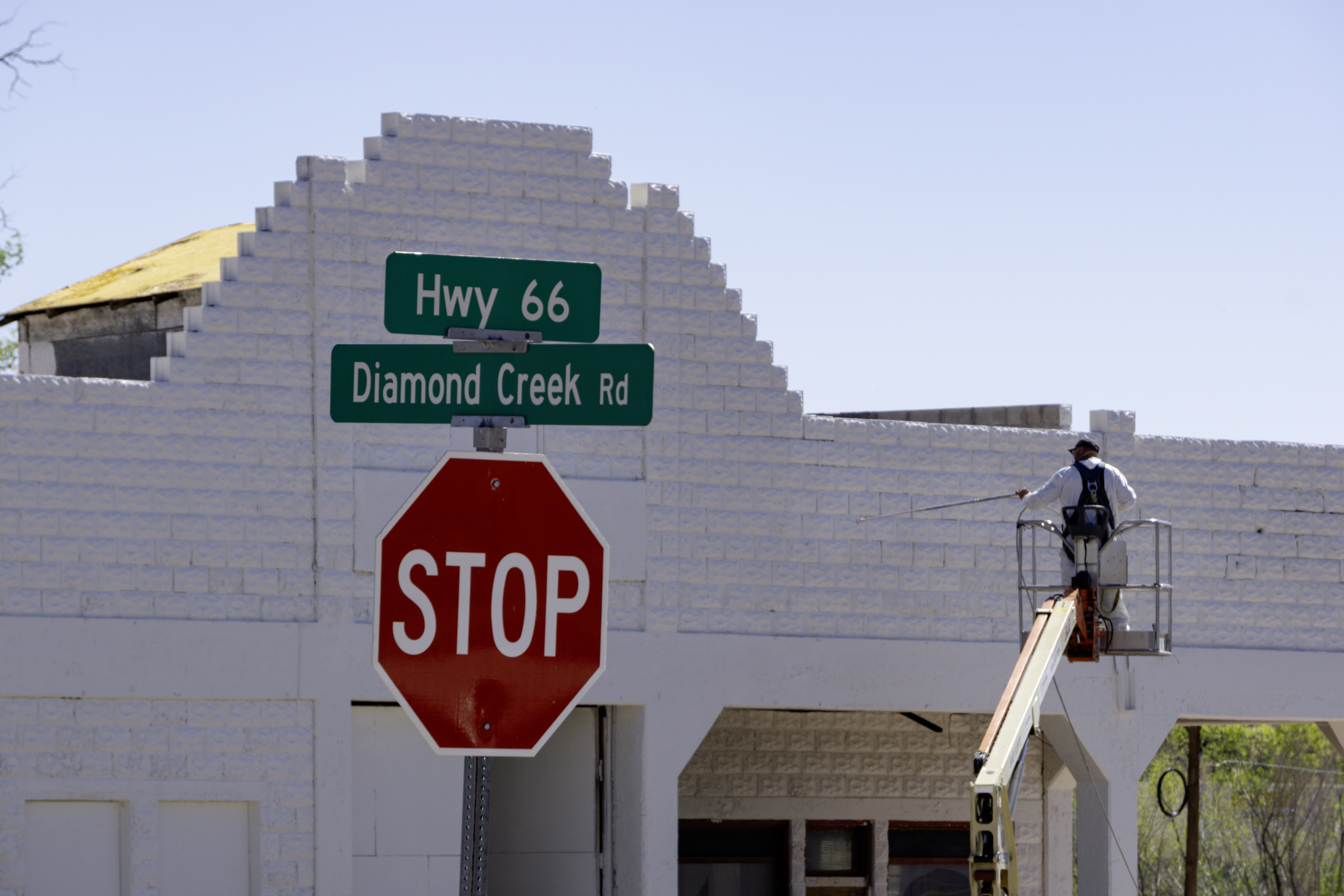

In April, I spent nearly two weeks in Arizona and New Mexico on Route 66-related work. I attended a national-level Centennial meeting in Albuquerque, celebrated Angel Delgadillo’s 98th Birthday in Seligman, visited with old friends in Kingman, and more — but the main focus of my trip was capturing the work at a former Shell gas station in Peach Springs, Arizona.
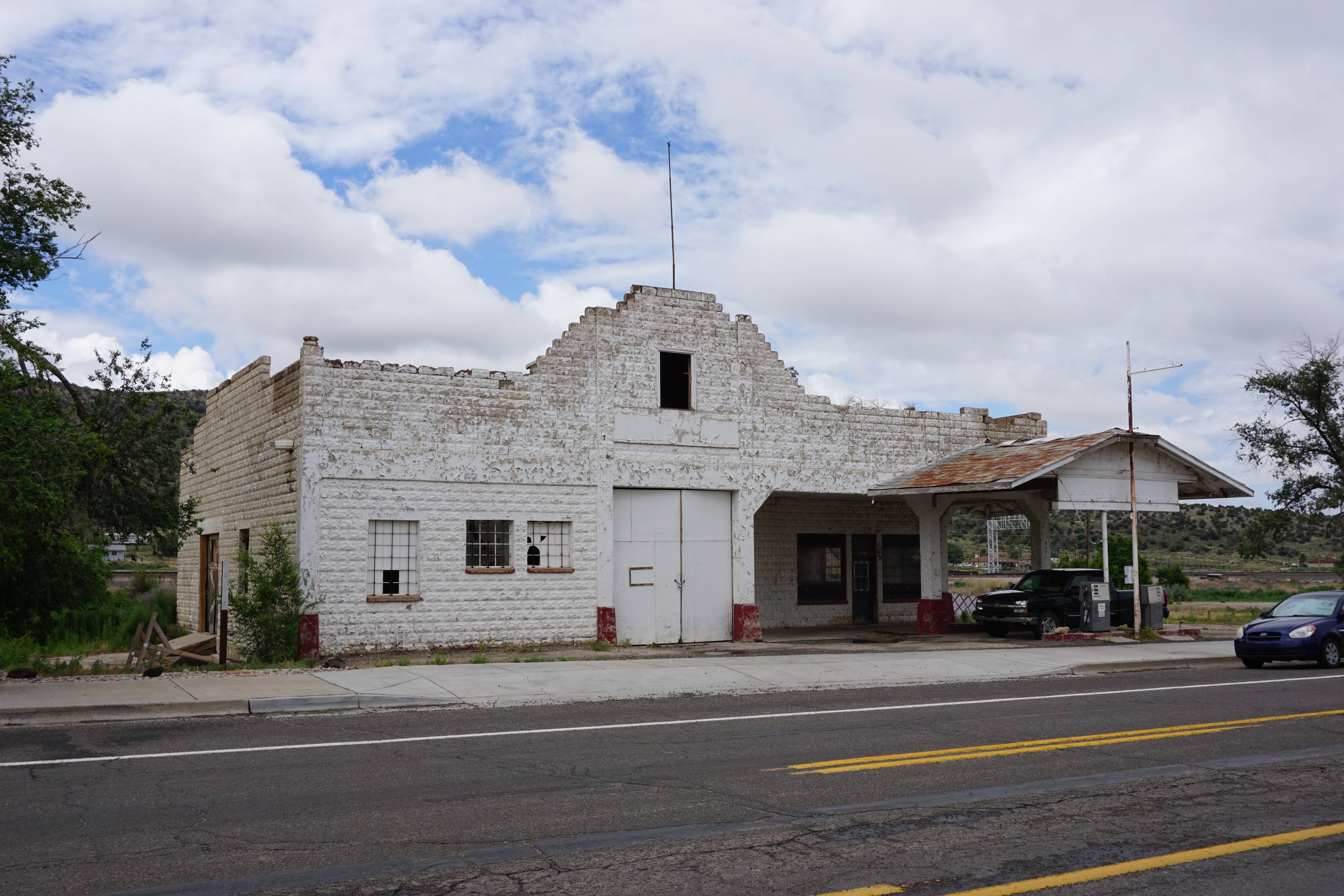
Popularly known as the John Osterman Station, the concrete-block building on the southwest corner of Diamond Creek Road and Historic Route 66 has a new lease on life. Once one of five stations catering to travelers on the Main Street of America in this small town, it’s the only one left standing today. And that is something of a miracle.
The town of Peach Springs sprouted along the railroad line within the heart of the Hualapai Nation in the late 1880s. John Osterman and his family had moved to the United States from Sweden around the time of World War I and eventually made it to Arizona. John opened his first service station and garage in Peach Springs in the mid-1920s; in 1929, three years after those first US 66 Highway shields went up, he built a new Shell gas station and garage right on the route.
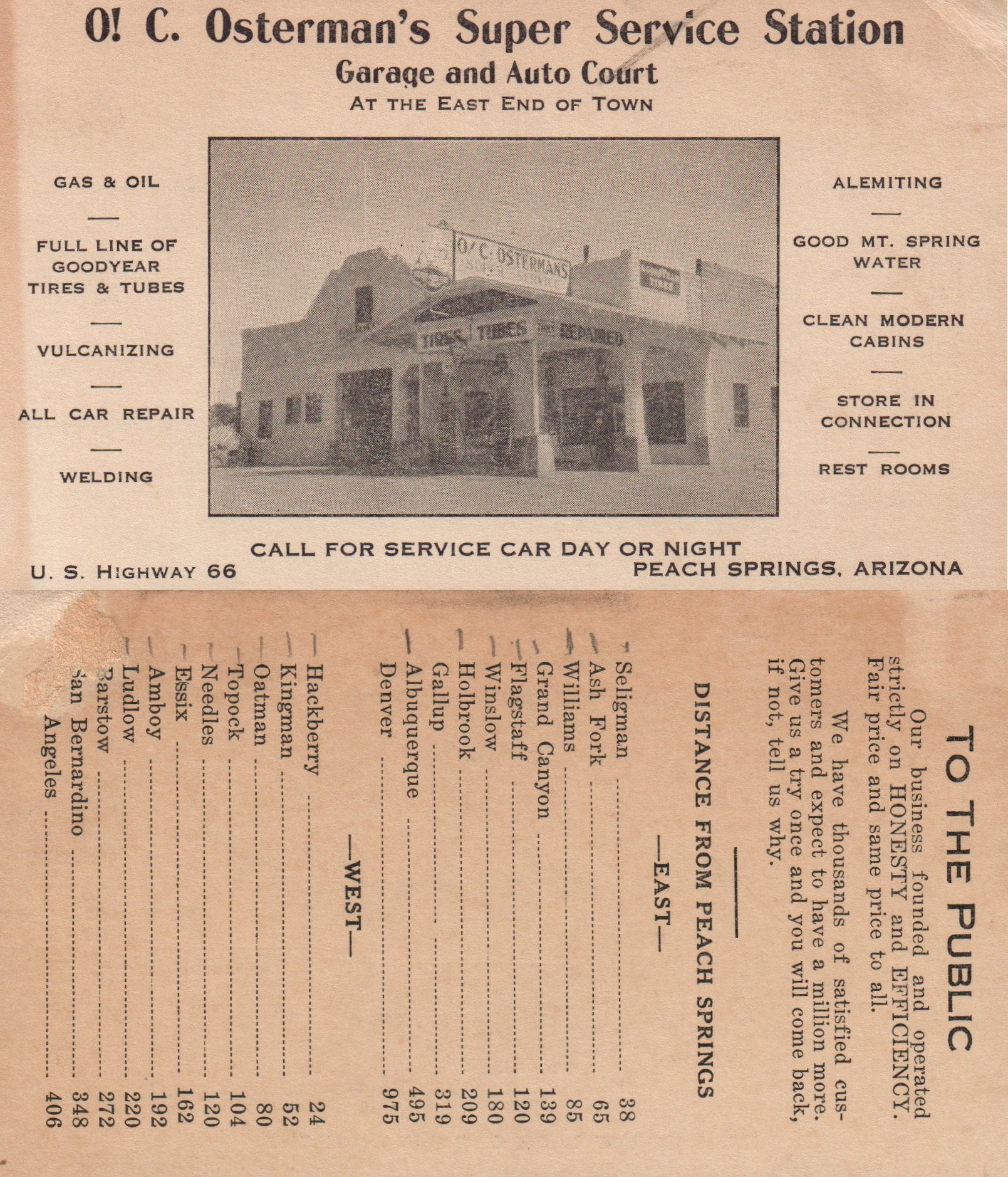
John and his brother Oscar operated the new Shell station along with a trading post and an auto court. In the late 1930s, the Ostermans decided to broaden their horizons and moved to Kingman where they opened a car dealership and other businesses. The Peach Springs operations were sold to Earl Boyd, followed by several other owners over the years.
In 1979, the interstate bypass was completed and traffic through Peach Springs reduced dramatically. Although several other stations folded (along with the motor court), the Shell station survived; it had become a local institution. Robert Goldstein purchased the Shell station in 1982 and operated it until it the mid-1990s. It operated intermittently afterwards as one of the last buildings left of its era.
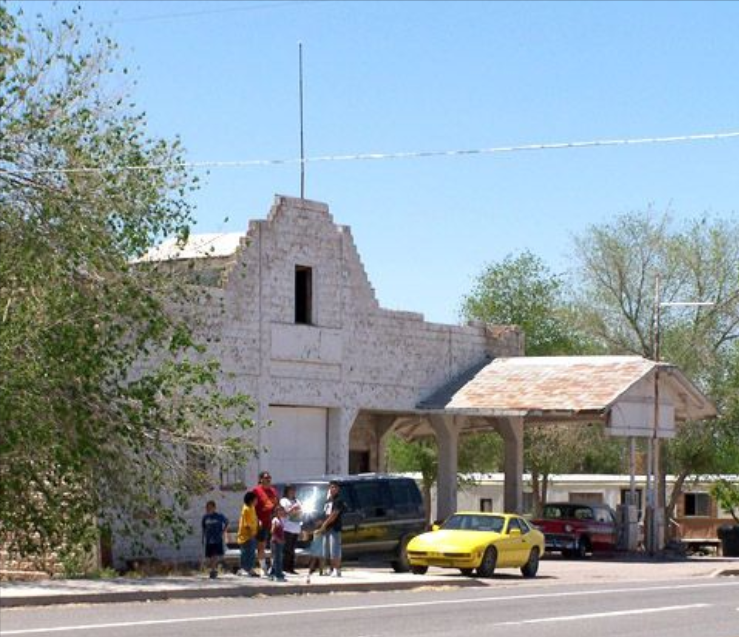
In the mid-2000s, the Hualapai Tribe purchased the shuttered station with dreams of returning it to service – perhaps not as a gas station, but something that helped share their story with the public, especially the travelers that were exploring Route 66. The building was added to the National Register of Historic Places in 2012.
Progress was slow, but things moved forward in tandem with other planning for the community. The COVID-19 pandemic caused a significant delay…and then disaster struck. A microburst in 2021 ripped the roof off of the building. Another storm knocked a whole section of the wall down, greatly impacting the stability of the structure and threatening an entire collapse. It seemed like the end was near for this historic station…but all was not lost.
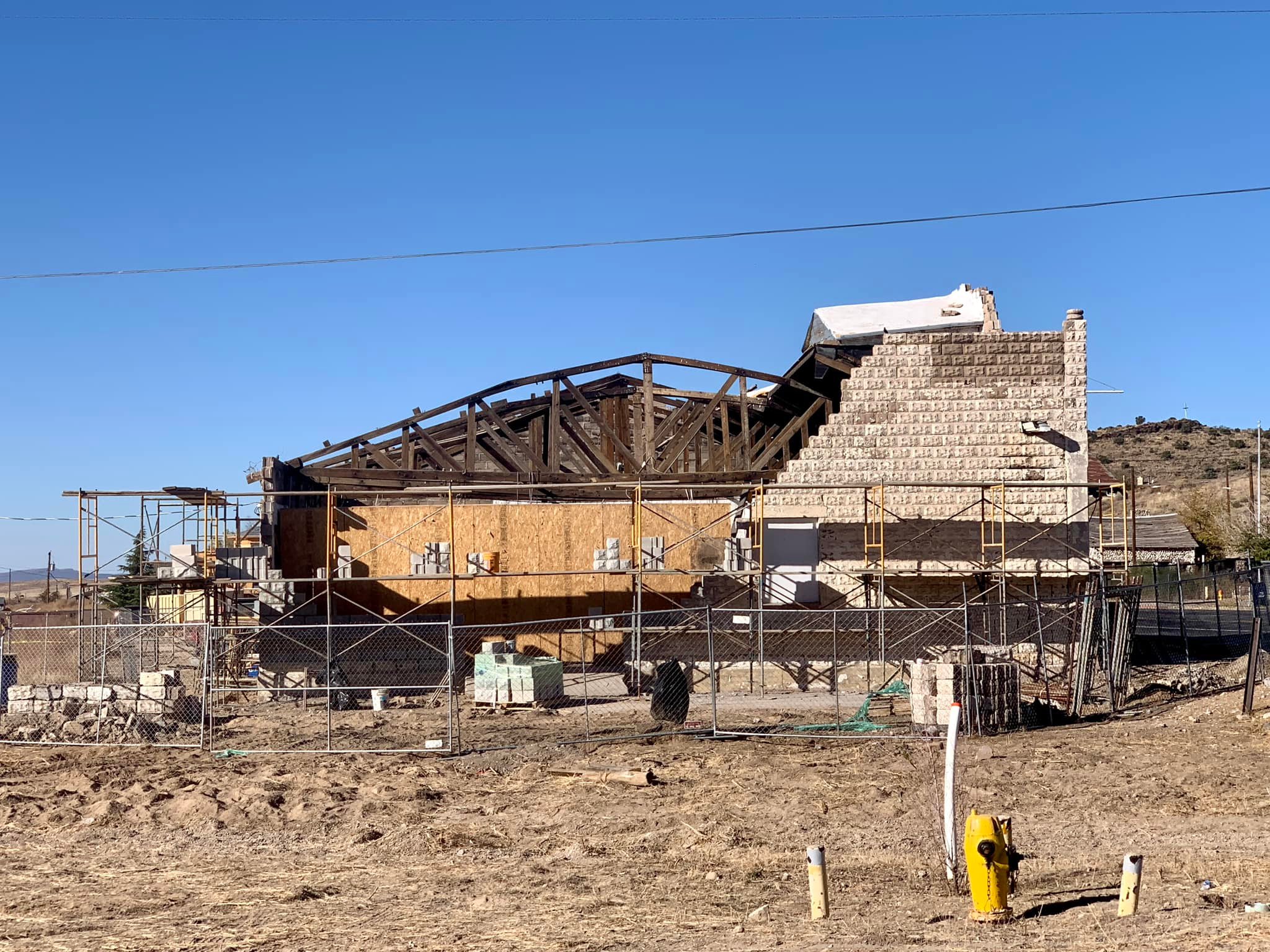
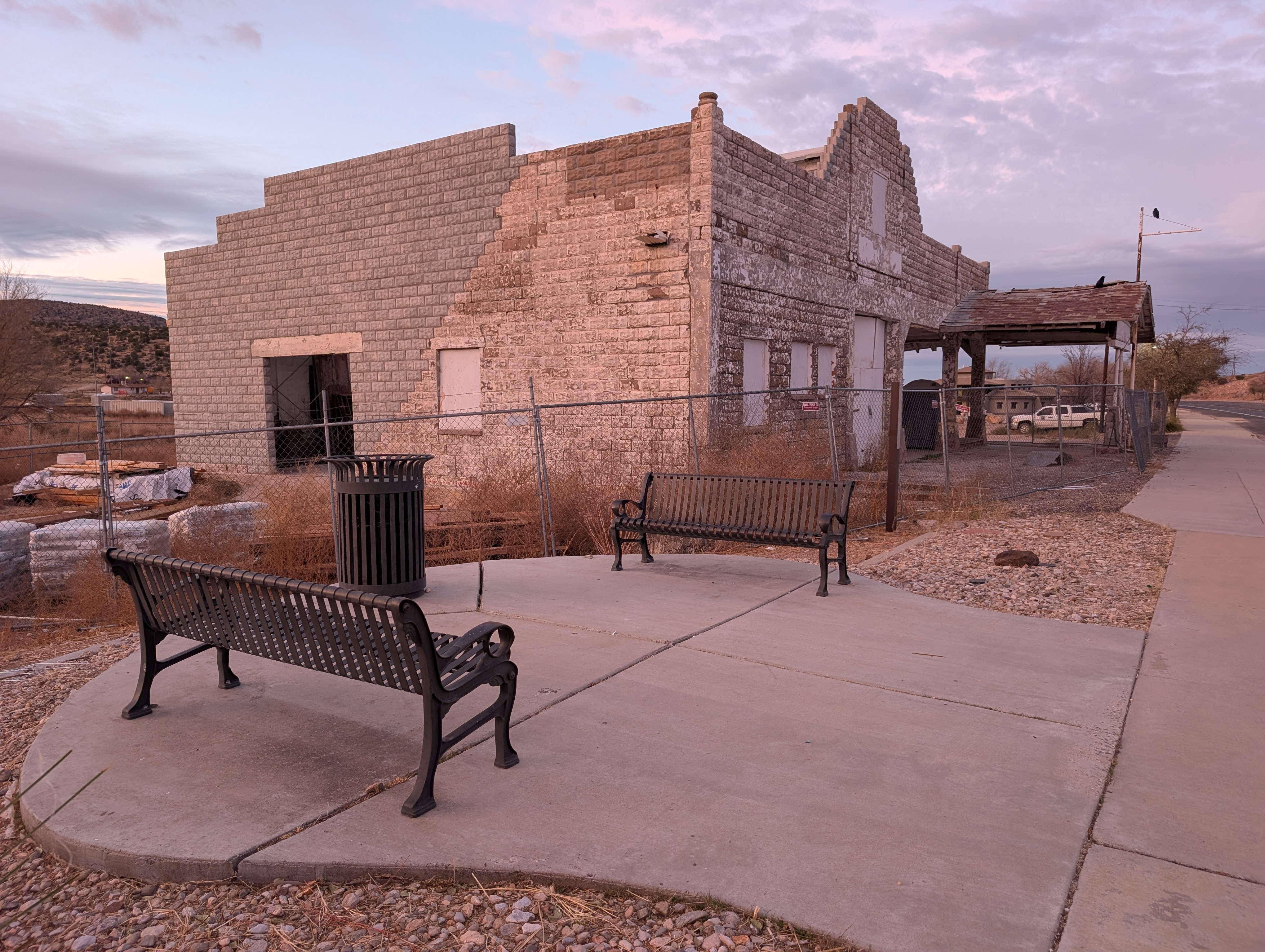
The station was named to the National Trust for Historic Preservation’s 11 Most Endangered Historic Places list in 2023. This brought greater attention to the station and its place in the region’s history; that attention galvanized efforts to save it. The tribe received several grants – including monies from the Historic Route 66 Association of Arizona and the National Trust’s Preserve Route 66 program – and reconstruction commenced. The walls were built out of concrete blocks originally ordered from a Sears & Roebuck catalog. Amazingly, the company that made those blocks is still in business…unlike Sears. New, identical blocks repaired the storm damage. New ceiling trusses were installed and the interior was cleaned up. The station began to take shape once again.
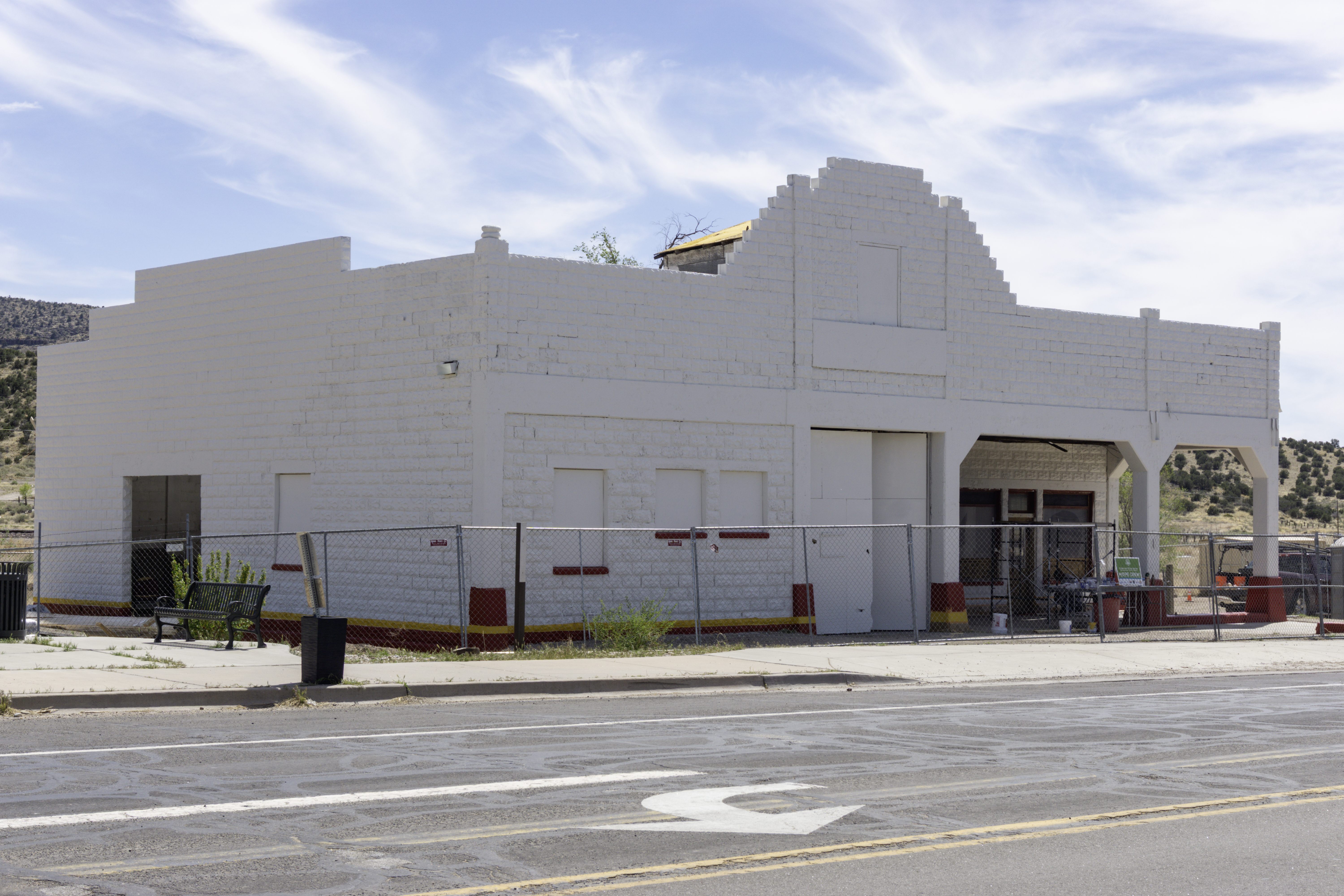
Now, in 2025, the canopy over the gas pumps is being rebuilt and the station itself is getting a fresh coat of paint with colors taken from the Shell identity of its past. The Trust’s HOPE Crew (Hands On Preservation Experience) partnered with the Arizona Conservation Corps and the Hualapai Tribe to bring in a regional expert and train tribal members on the best methods for restoring and painting historic structures. The color scheme is bringing back the vintage Shell station colors to this corner of Route 66.
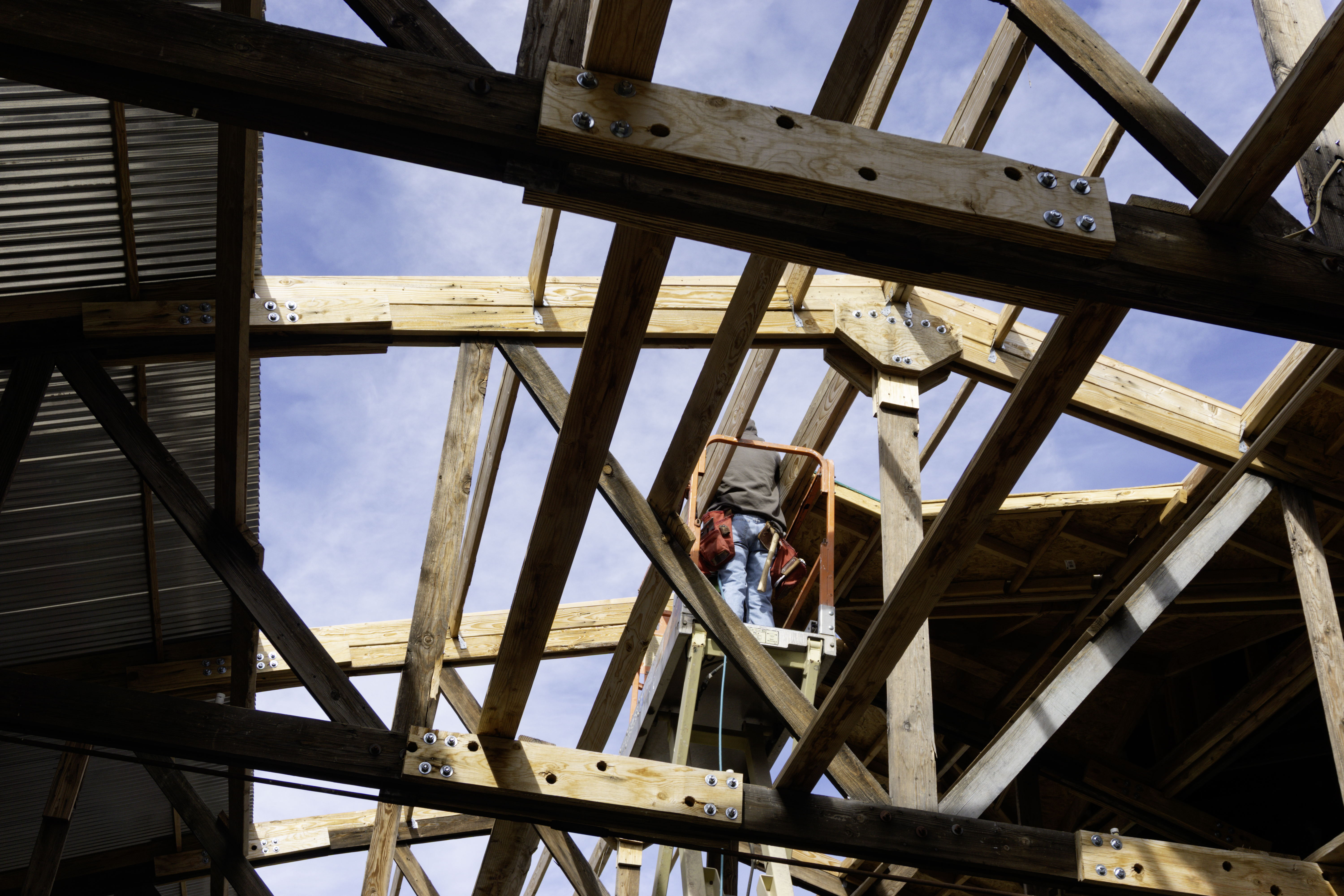
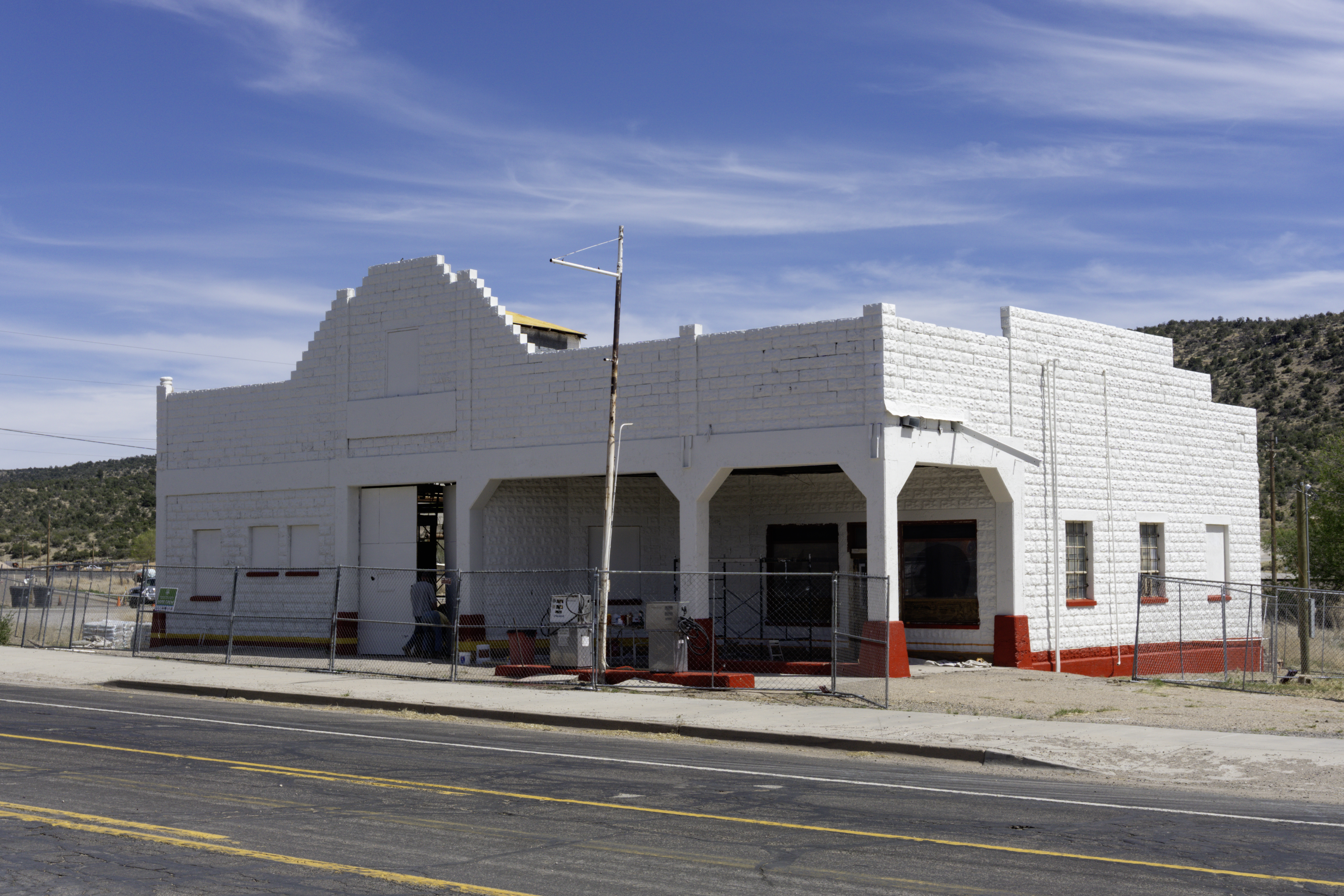
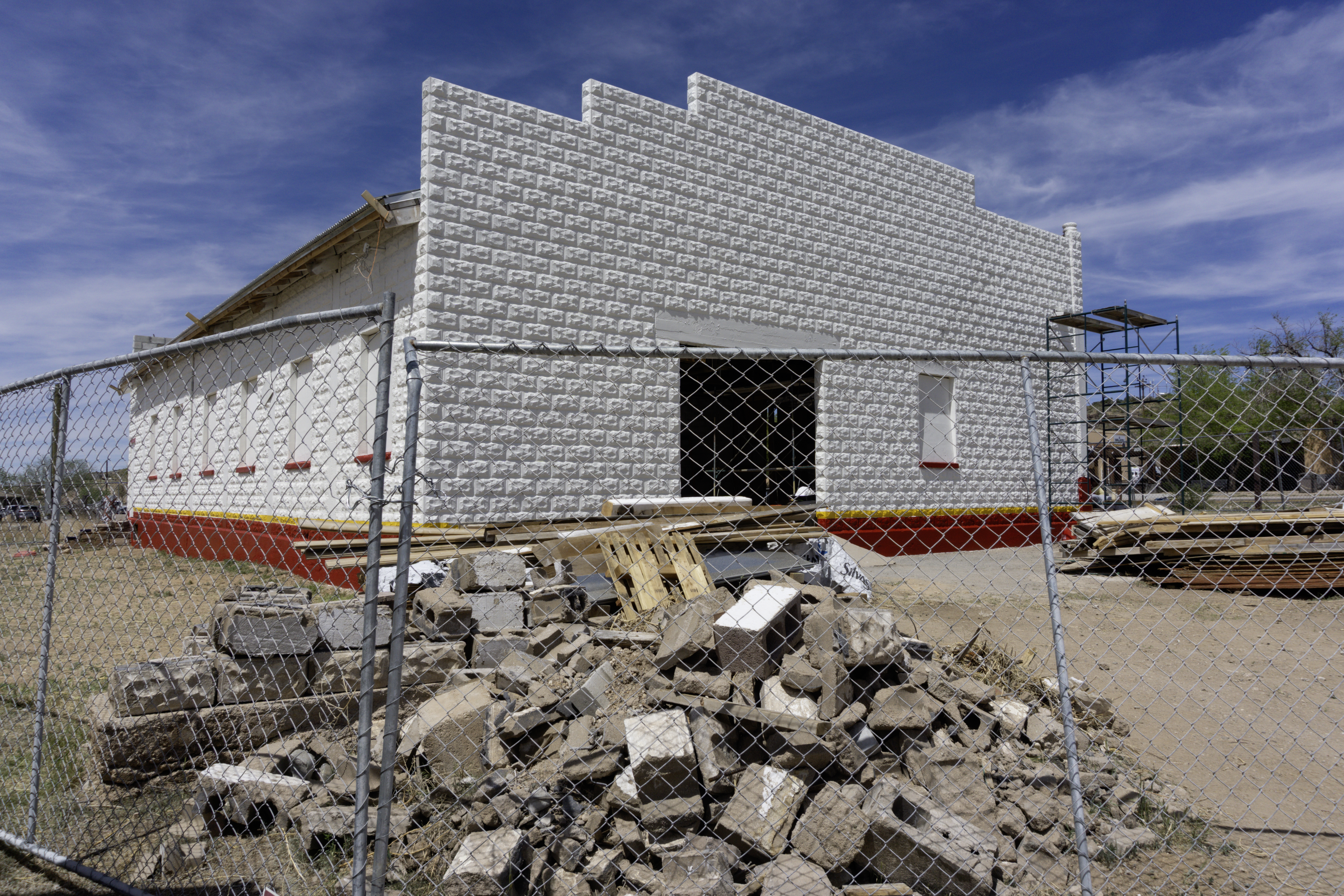
There’s more work to be done, of course. More roof and ceiling work is needed to fully secure the building. The Hualapai Tribe is still discussing the future use of the station: Some want it to be a public-facing cultural center and others would like to see it returned to active garage service since no other facility like that exists in town. Regardless of the final decision, the station has a much brighter future now than it did just a short time ago.
But beyond that, the restoration of this station is an acknowledgement that the story of Route 66 is the story of the Hualapai, too. Their place on the road is just as much a part of the journey as the well-known landmarks that pop up in every guidebook. But there’s an intangible feeling that is coming back, too. One of the locals I talked to last November remembered the station fondly and was excited about it coming back to life. She said, “Coming around the bend, you could just see the lights…and that signified home.”
 Rhys' Pieces
One thought on “The Osterman Station”