
Last week, I drove up to the southeast corner of Kansas to help celebrate the rehabilitation of the Brush Creek Bridge, the only Marsh Arch concrete span left on Route 66. Locally, it’s known as the Rainbow Bridge though I never knew why. The locals that also gathered there for the occasion told me it’s because back before it was bypassed, the stretch of highway here was curved in such a way that it became known as the Rainbow Curve Bridge…which later just became Rainbow Bridge. It’s just a coincidence that the bridge itself also mimics the shape of a rainbow. The More You Know! But that wasn’t the only reason I went to Kansas’ stretch of the Mother Road. I also needed to make a stop in Riverton.

The Rainbow Bridge was media blasted, repainted, and given new signage. 
The crowd gathered to celebrate the completion of the project included a member of the US 66 Centennial Commission, Dean Walker, and representatives of Cherokee County, Kansas. 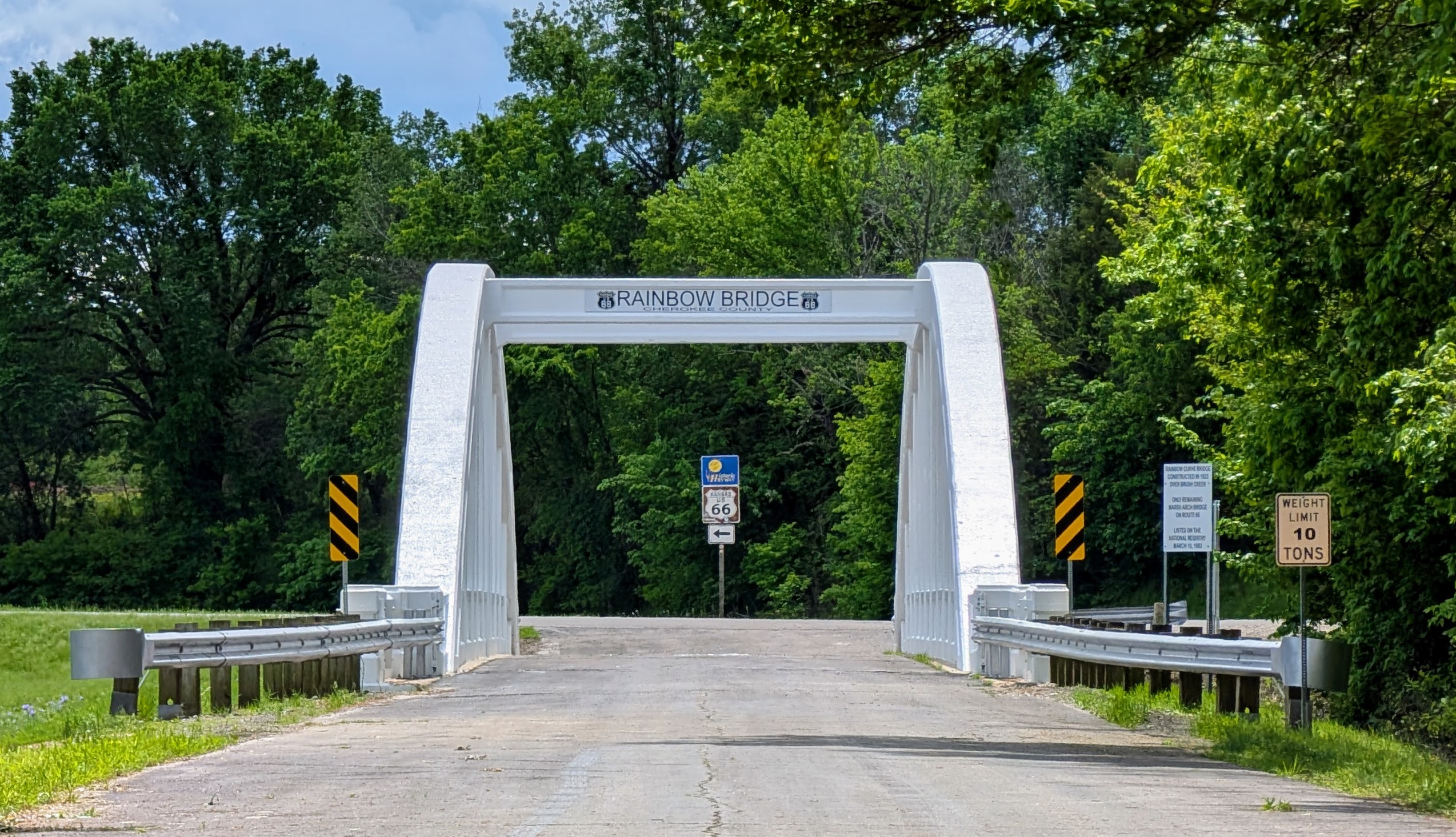
The bridge looks beautiful and ready for Route 66 photo ops once again!
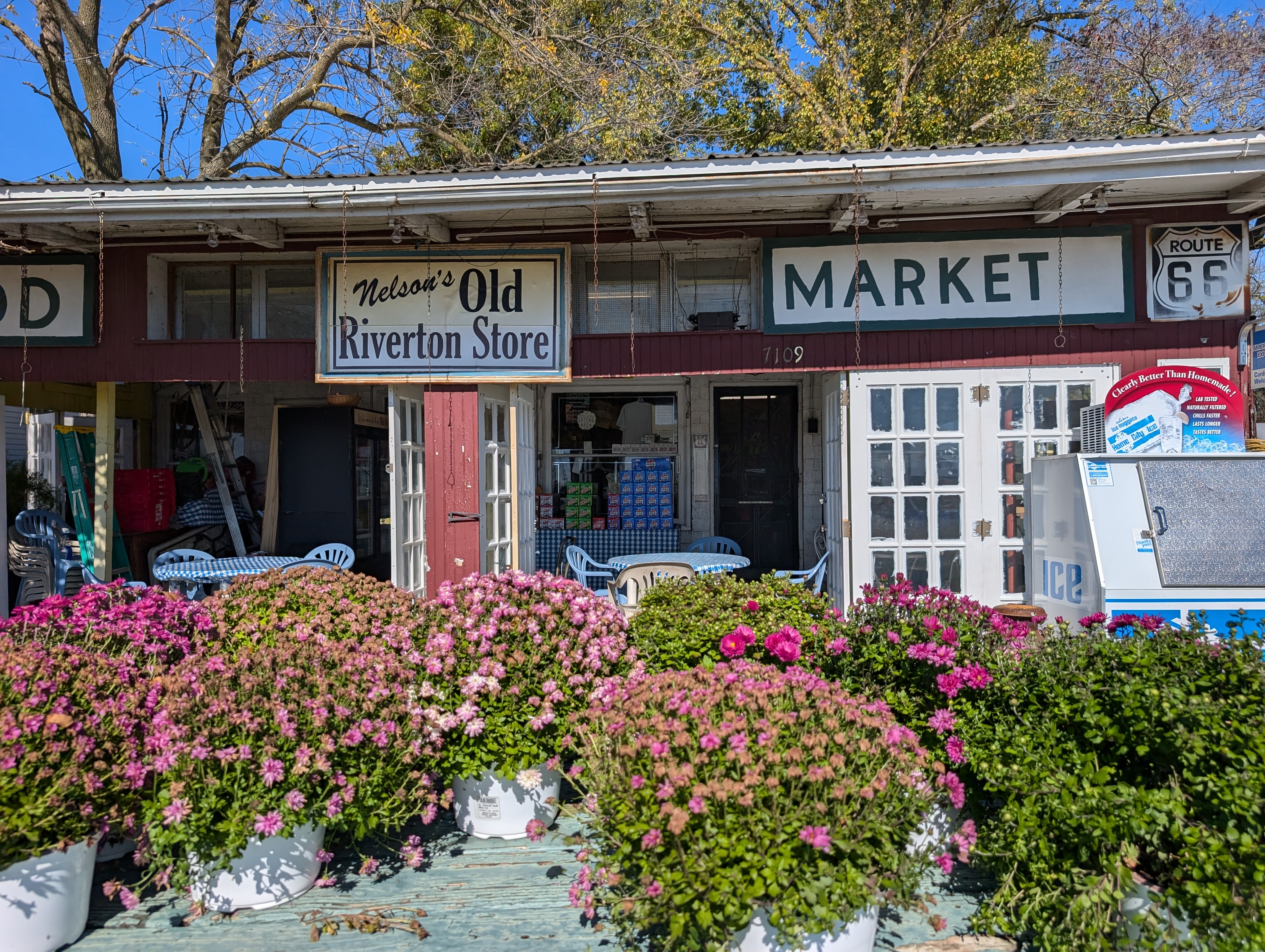
Riverton, Kansas has a population of 683 and sits along the state’s small stretch of Historic Route 66 – 13.2 miles, to be exact. If you’re taking the modern replacement for the old road, Interstate 44, you don’t even cross the border into the Sunflower State. But the towns along that diminutive mileage (Galena, Riverton, and Baxter Springs) make the most of their place on the most famous highway in the world. And Scott Nelson’s Old Riverton Store is a big part of that.

The store was built in 1925, one year before the famous Highway 66 got its number. The road was already paved due to the strength and need of the local mining industry; Leo and Lora Williams saw the need for a market and meat counter, so they built one with residence quarters on the side. They sold gasoline and groceries to locals and travelers alike. When Leo died in 1948, Lora ran the business until she sold it in 1973 to Isabell Eisler. “The store has been run, most of its time, by women,” said Scott Nelson, Isabell’s nephew. Scott had managed the store for decades before purchasing it in 2011. “I wouldn’t be here if it wasn’t for my aunt…nor would the store be here if it weren’t for Isabell.”

The store operates today much like it always has. The landscape outside is filled with flowers and plants for sale, the tables and chairs on the front porch are often filled with locals discussing the news of the day, and the store itself still sells provisions and deli sandwiches. The part of the store that was originally a residence is now a Route 66 gift shop and Scott’s office.

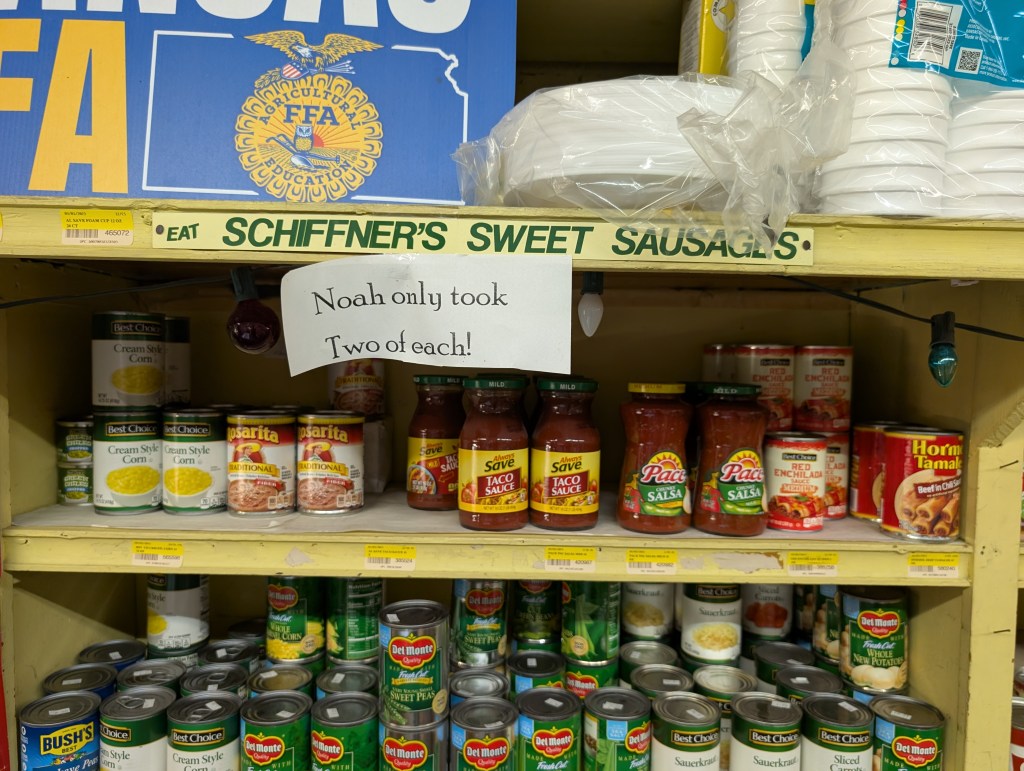
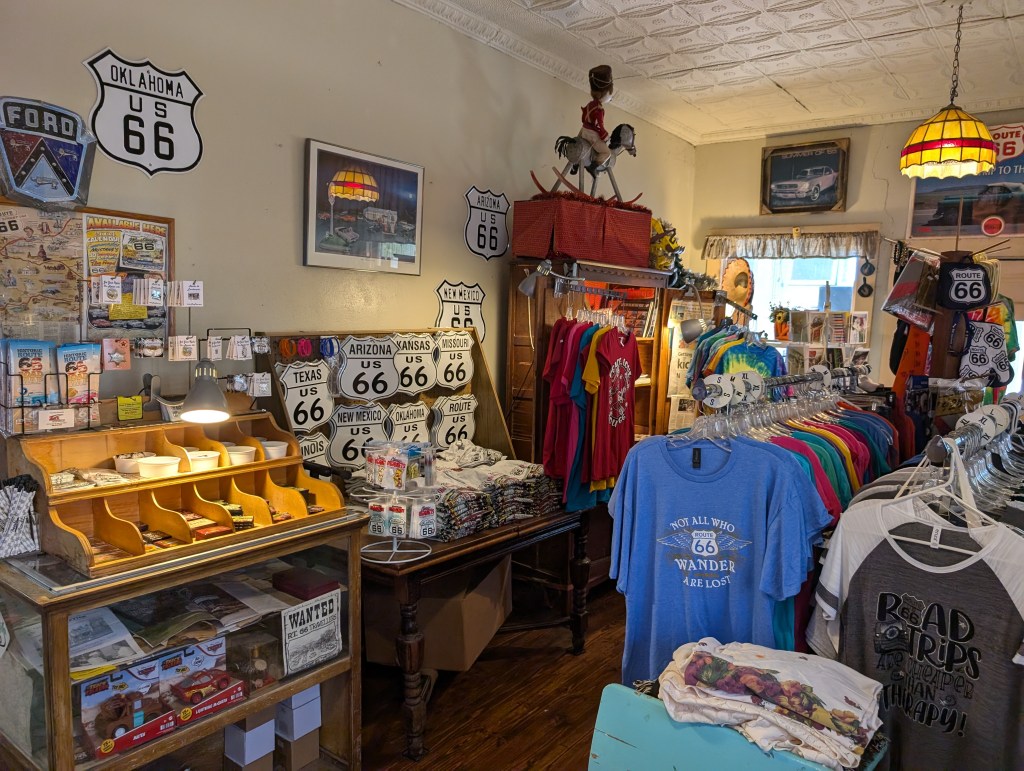
Just because the building has been around for 100 years and sits along a famous road doesn’t mean it’s easy. “There’s always…having enough help or having people at the right time,” Scott said. “Keeping up with whatever the latest new thing you have to do…price increases…there’s just things you have to stay on top of.” The store stays open year-round but they see an increase in March through October due to the nicer weather and influx of travelers from around the world that are driving Route 66.
The upcoming Route 66 Centennial is driving a lot of excitement in the community, and the Old Riverton Store is no exception. “I’ve been excited about that for a long time,” Scott said. “In 1990, when Michael Wallis wrote his book, [people’s interest] just ballooned. I saw the signs [as a kid], ‘This is Route 66!’ I knew it was something special. It’s only gotten bigger as the years have gone by…I can’t imagine what next year is going to be like.” He talked about a recent visitor from Canada who was scouting locations for a vintage motorcycle tour to take place in August of 2026.

Scott’s office is a representation of the daily grind that’s required to keep such a business operating in a small community. Papers stacked in cabinets, folders jutting over the edge of shelves, photographs and other artifacts collected over a century of operation. But Scott has his own system of organization and knows where everything is. “You’ve got to love what you’re doing,” Scott said. “Some days I feel like George Bailey from ‘It’s a Wonderful Life’ but you get all kinds of [experiences] at the store.”
He proudly showed off a memo from the US Department of Transportation in 1992 outlining the federal regulations about preserving historic bridges that had been deemed deficient. Scott was instrumental in saving the aforementioned Brush Creek Bridge when it was threatened with demolition in the early days of the Route 66 revitalization efforts. The new bridge alongside it was under construction and the county had planned to demolish the unusual concrete Marsh Arch bridge.

A gentleman from Indiana had mentioned to Scott how they were able to save historic covered bridges up north, which led him to the regulations allowing for a limited-use bypass. He contacted the County Commissioner and lobbied to preserve the old bridge. Through his advocacy, the bypass plan was altered to incorporate the old span as a landmark.
I asked Scott what would be lost in the community of the Old Riverton Store closed tomorrow and the twinkle in his eye dimmed. “Oh. Oh, so much,” he responded like he’d had the wind knocked out of him. “It’s not only people that come here for things that they need…but the history of the store. Most of our customers are like family, you’ve known them for years.” He spoke of the store as a community gathering place, where people see one another and connect. “I’m not like a Dollar General, that’s corporate. They have a presence here…but they’re not really here. We are here. I couldn’t imagine Riverton without the Old Riverton Store.”
Scott spoke of sponsoring the Little League team and helping them with signage. He mentioned the local school’s Teacher of the Month program and how those recognized educators come down for a free sandwich. “They just come in with their certificate and I give them a sandwich. It’s part of the deal.”

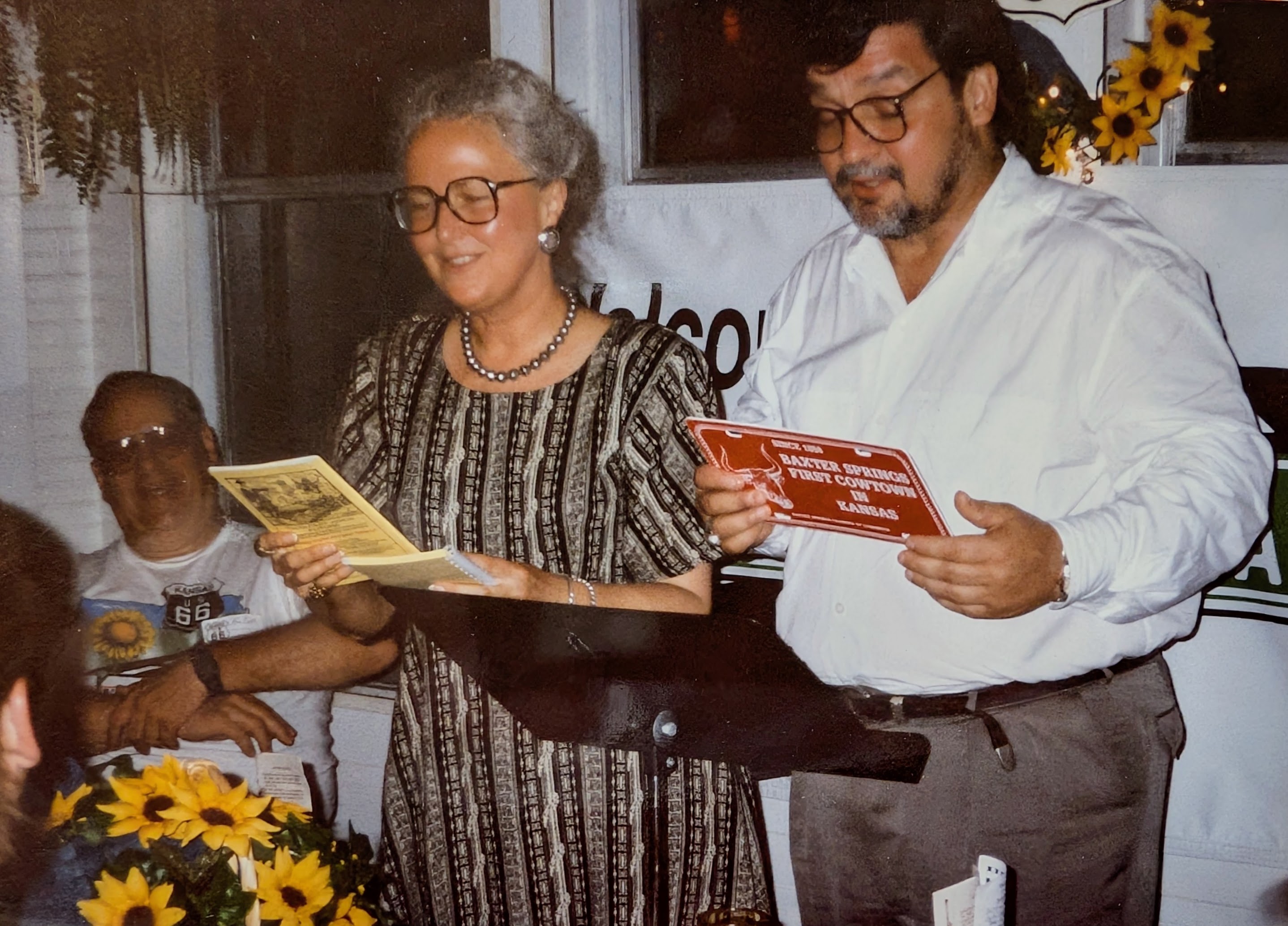
Time marches on and some changes are inevitable. The group of old-timers that would come drink coffee each morning and “solve the world’s problems” has dwindled. The price of goods has changed significantly and credit/debit cards are more common than cash most days. But the tin ceiling is still in place and the high shelves are full of artifacts and reminders of the past. Faded newspaper articles speak of past celebrations like the 1992 celebration of Route 66’s 66th anniversary and scattered photographs show off tour buses from the Smithsonian led by Michael and Suzanne Wallis. In 2024, the National Trust for Historic Preservation awarded a grant to the store to replace the aged wooden French doors that line the front patio. There were copies of a local newsletter on a shelf, celebrating their receipt of that grant.
At the end of the day, it’s about stories and connecting with people. “It’s history that’s still alive,” Scott explained. “That’s what people come to see. People…walk in the door and say it still smells like the store when they were a kid.” He thought for a moment, and added, “The sandwiches are good, too!”
 Rhys' Pieces
Rhys, I always enjoy your visions and writings from the route. Most informative and very well done.
Bob Blakney – Tuscaloosa, Alabama