It was already warm when I went to breakfast at the Best Western in Barstow, California. It was just going to get warmer, of course, as the sun rose and we ventured east into the Mojave towards Needles, our destination for the day. I noticed that I was getting quite tan already, even though I was spending most of the day in the car. It was then I realized that the glass on a 1964 vehicle doesn’t have latest in UV filtering technology. The jacket I’d worn in the Pacific Palisades became a lap blanket off-and-on for the rest of the journey to keep me from burning.
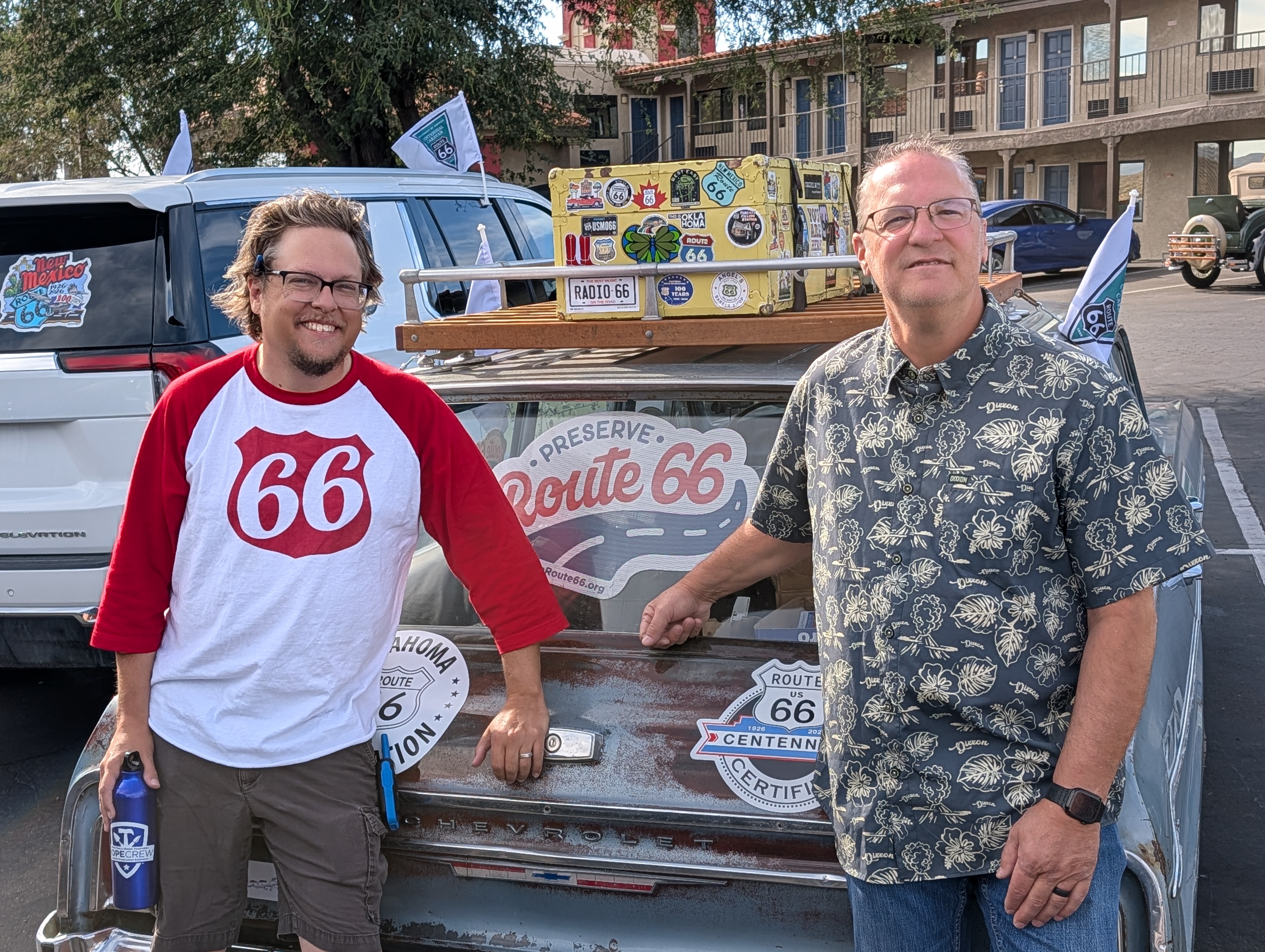
Tim Taylor, the owner of Bootlegger the station wagon, was heading back to Oklahoma after a few days in California; we met up for a few minutes early that morning. He asked about the car’s performance, we talked about the radiator issue, and he gave the car a clean bill of health. “I want this to be a trip of a lifetime,” he said. “Just have fun!” What a blessing this man was and continues to be.
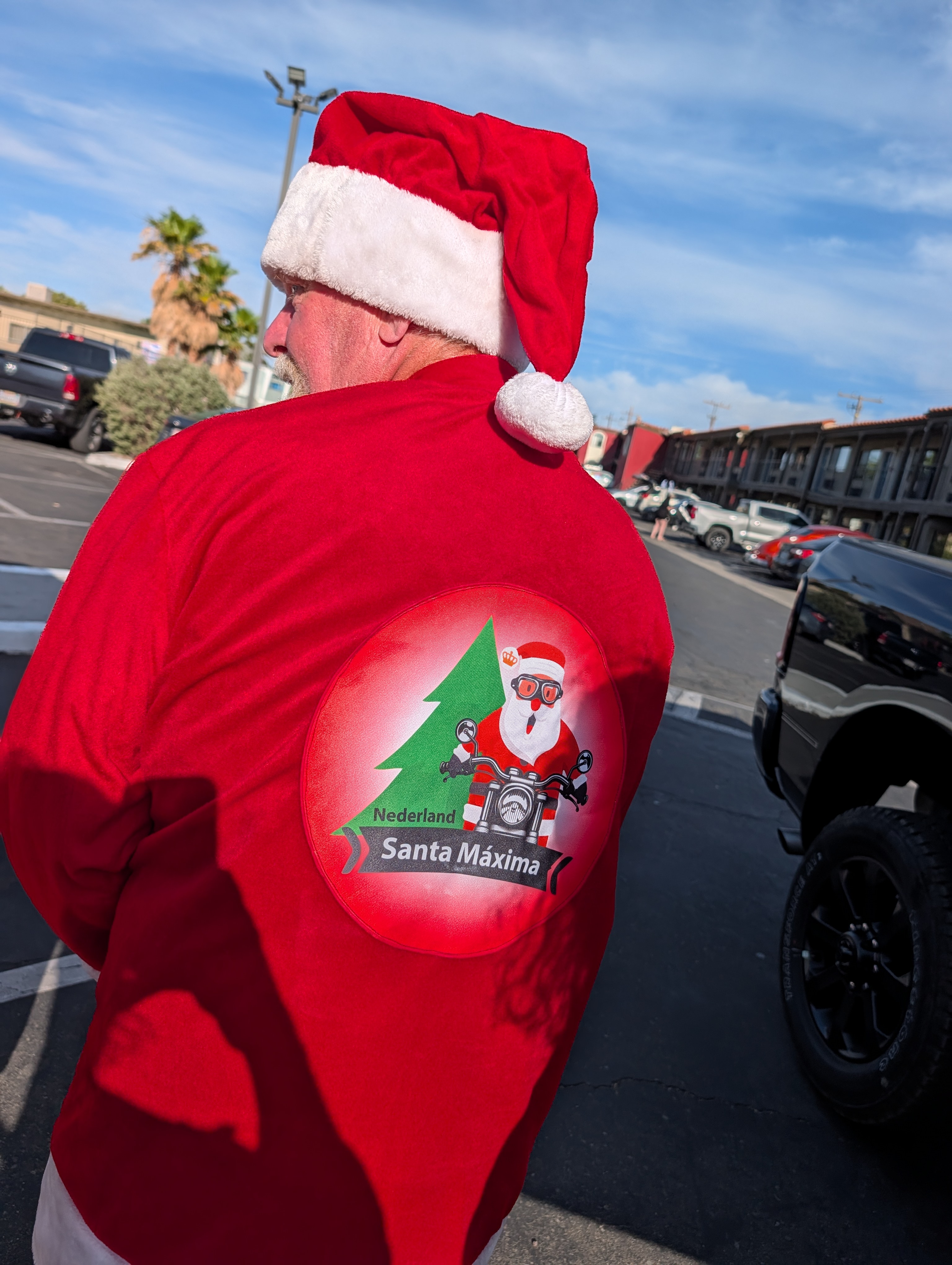
Before we left Barstow, I noticed my friend Dries Bessels in an unusual getup…especially for the desert. Dries, a Dutchman who was representing the ‘International’ aspect of the Route 66 Road Ahead Partnership, was in a full Santa Claus suit. Or, to be more accurate, Santa Maxima. The suit represented a Dutch charity motorcycle group that raised money for pediatric cancer. Dries raised money throughout the trip for this charity and I saw him in the full suit multiple times throughout the journey; it always brought a smile to my face.
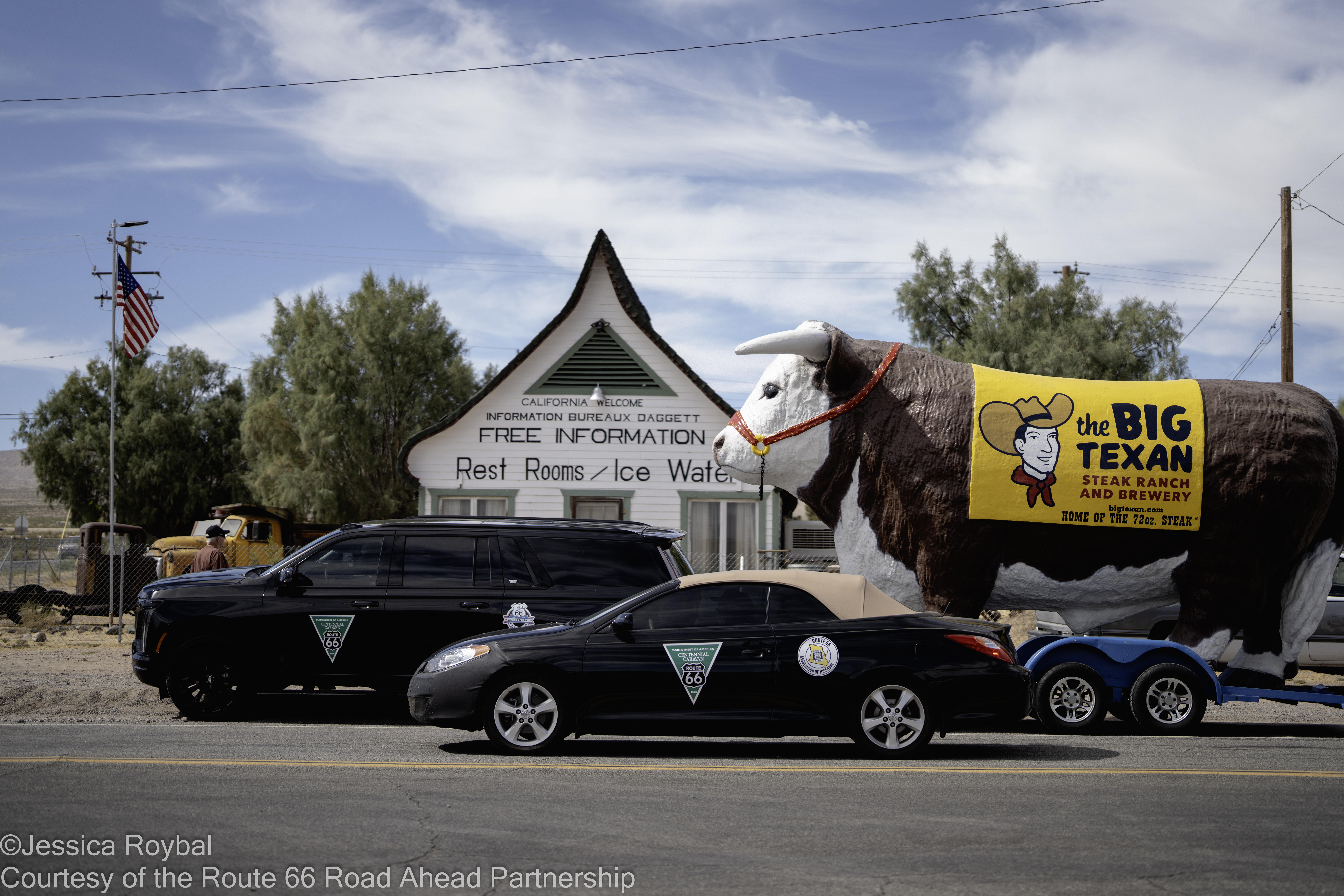
We departed Barstow on time and made our first stop not far away in Daggett. It’s a small town, and even when Route 66 was new the town was in decline due to the local mining industry relocating to the north. There are more solar panels within city limits than people today, but there’s still a story to be told if you take the time to look. The Caravan stopped at the former California Information Bureau building, also known as the Ski Slope House or the Russian House due to its distinctive roofline. They received a grant from the last round of the National Park Service’s Route 66 Corridor Preservation Program in 2024 and the site is looking pretty good! Locals were on hand to tell us a bit of history and let us look around the site. While we were wandering, an astonishing Auburn automobile pulled up to say hello!
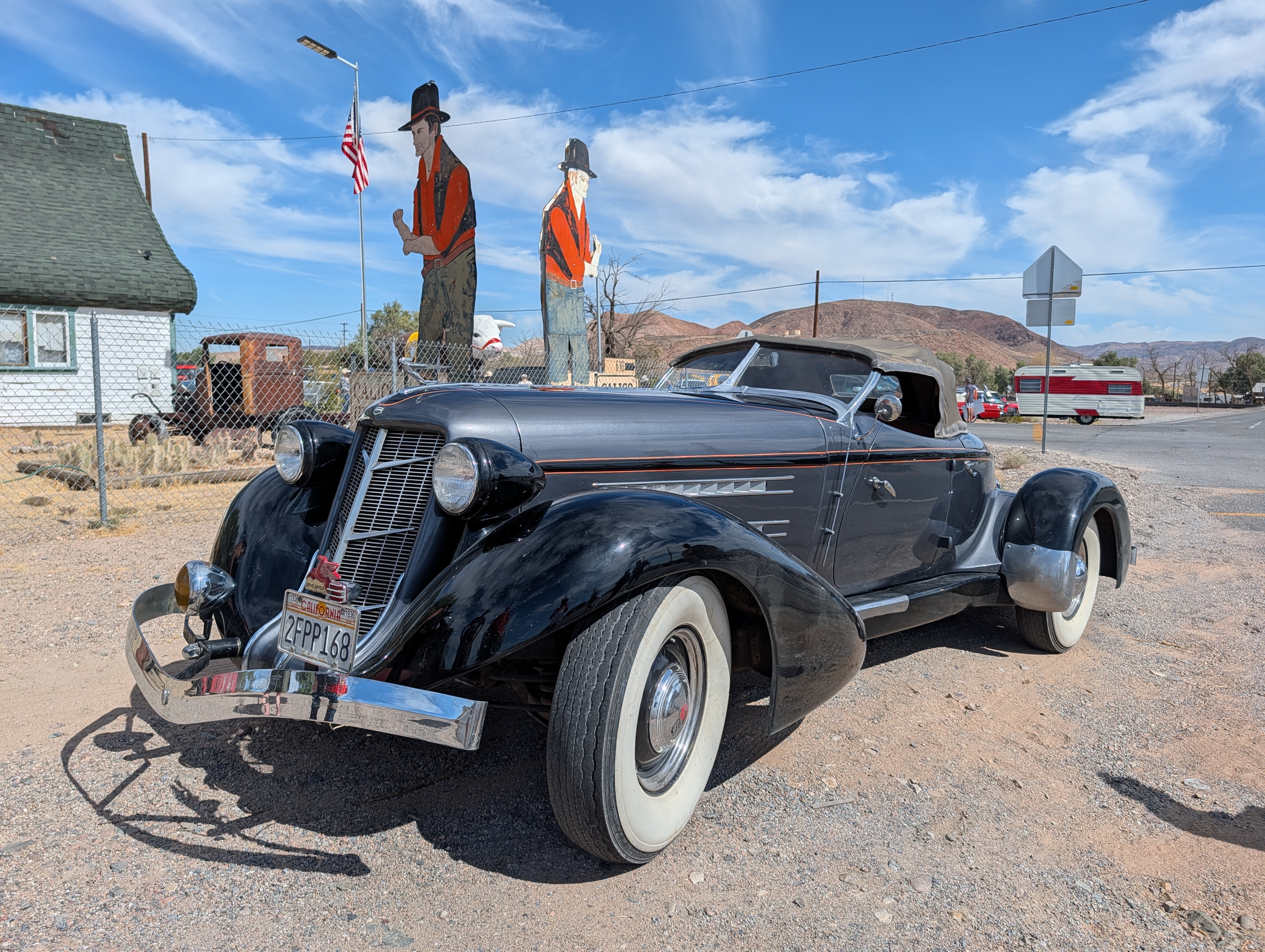
The desert landscape well and truly unfolded as we continued east to Newberry Springs. We stopped at two places there, right next to each other: The Barn and the Bagdad Café. Both have received grants from the National Trust for Historic Preservation in recent years, and when I told the owner of The Barn I was with the Trust she lit up like a Christmas tree. She eagerly took me around the property to show me how the Trust’s grant helped them install new, fireproof siding and how it had helped them fix the collapsing water line. She invited everyone inside and shared her passion for her place on the road and the road’s ongoing story.

At the Bagdad, several long-time roadies lamented the recent passing of Andrea Pruett, who bought the building when it was the Sidewinder Café in the 1990s. She and her husband renamed it the Bagdad Café after it became famous in a German cult-classic film of the same name. The current caretakers are committed to keeping the business going as long as they can and their grant is going towards a few structural needs like the roof.
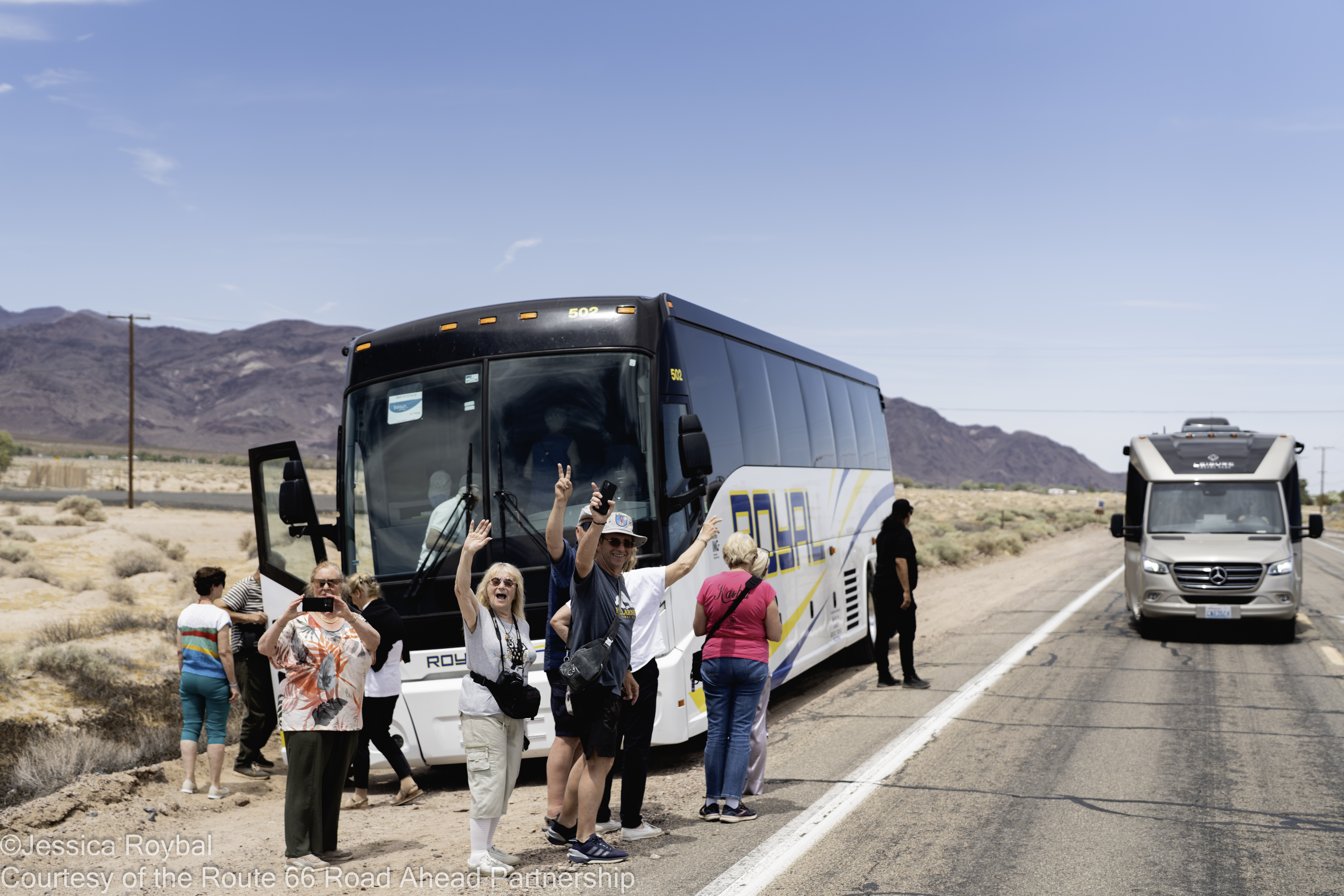
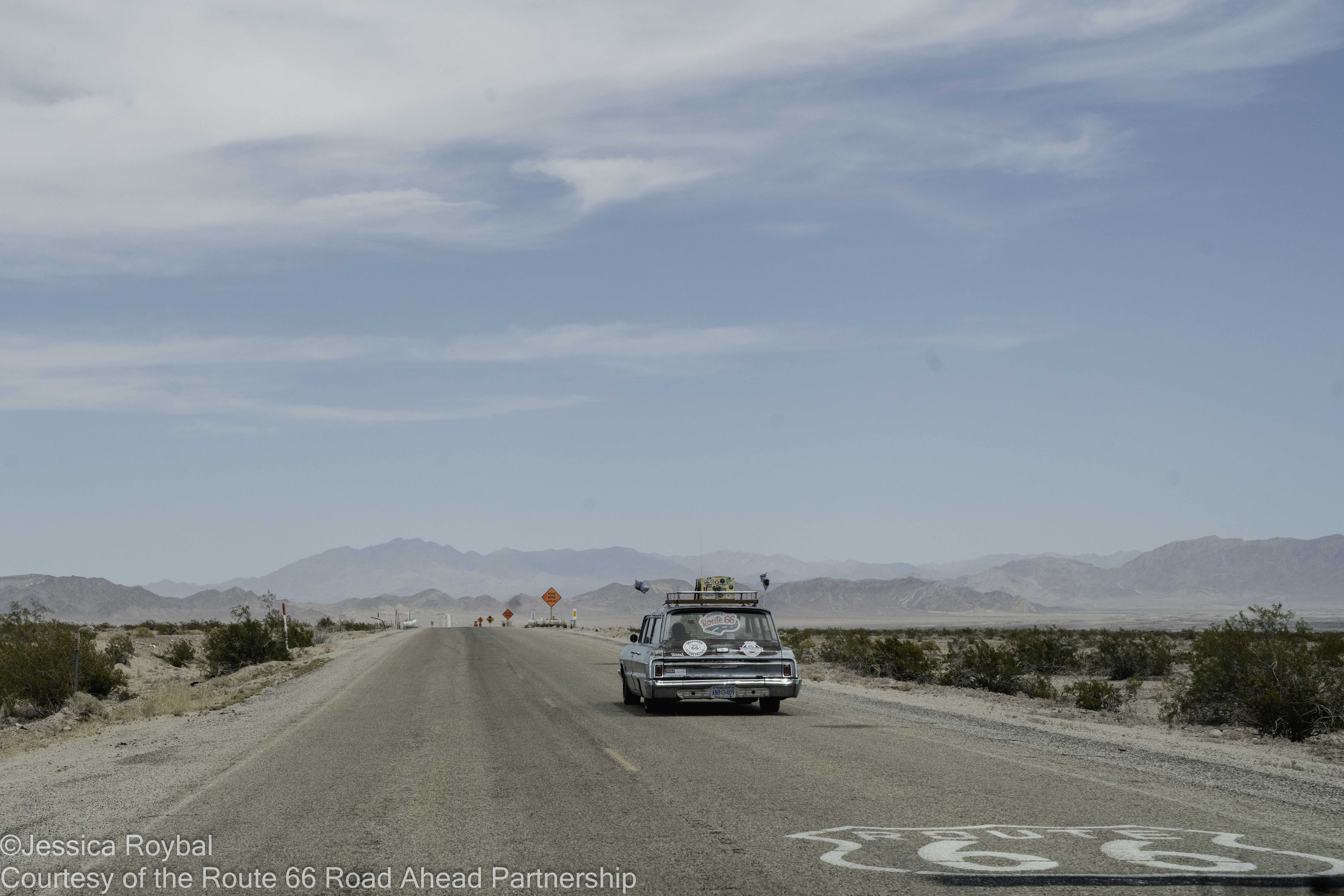
It was almost 11:00 AM when we departed Newberry Springs and the heat had set in. The road through Ludlow and on to Amboy is a quiet, isolated stretch of road; the kind of landscape most people picture when you say Route 66 out loud. I found myself pacing a freight train for a few miles as the two-lane road weaved through lava fields and past scrub brush. It was peaceful and beautiful. Dean Kennedy, our roadie advocate and ‘National’ representative for the Caravan, stopped at the lone tree that marks the former townsite of Bagdad to give it some water. Kelly Paras, my friend and peer from the National Trust, learned about this tree during her time with the Caravan and said:
“There’s a tree along Route 66 that really has no business being there. It stands alone in a harsh landscape, with no other trees nearby. Very little suggest that it should survive. And yet it does. Travelers water it as they pass by. And nearby residents look after it. … By the end of the journey, it had become this beautiful metaphor for Route 66 itself. Like that tree, Route 66 survives because people keep tending to it and steward it. Across eight states, the Caravan revealed a corridor sustained by communities who continue to invest in the places that make the route memorable.“

Bootlegger crossed the desert flawlessly, and soon our group arrived in Amboy. A large motorcycle group was there, heading west, and they were really excited to see our crew pull up. Ken Large, manager of Roy’s, met us with cake and a cookout. We dined under the gas station awning and marveled at our surroundings. What must people have felt when they saw this oasis on the horizon when their water bag was empty? When it’s dead quiet in the middle of the night, does it feel like you’re on another planet? If you’re not familiar with the story of Albert Okura and his purchase of the entire town, here’s an interview with him from ROUTE Magazine.
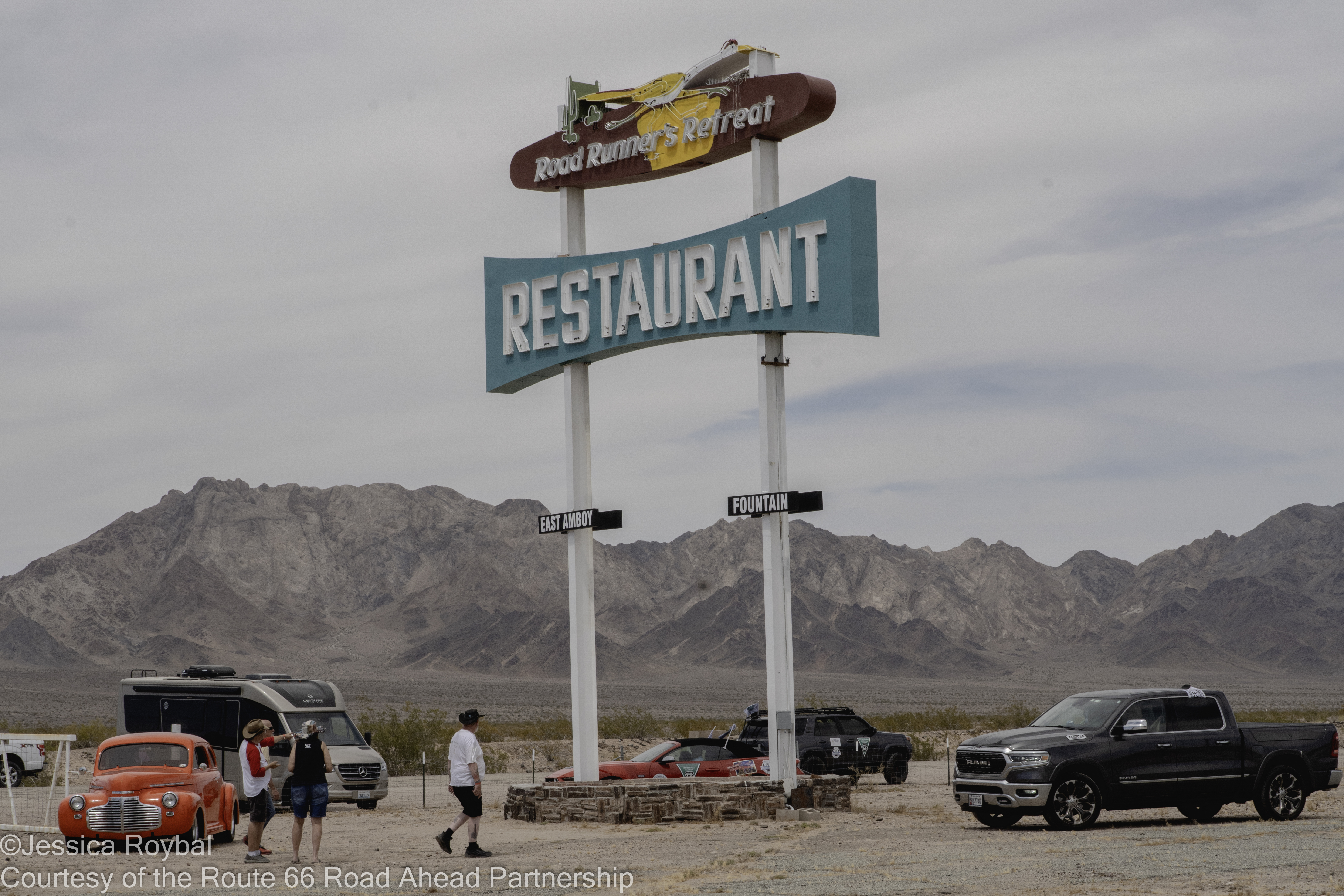
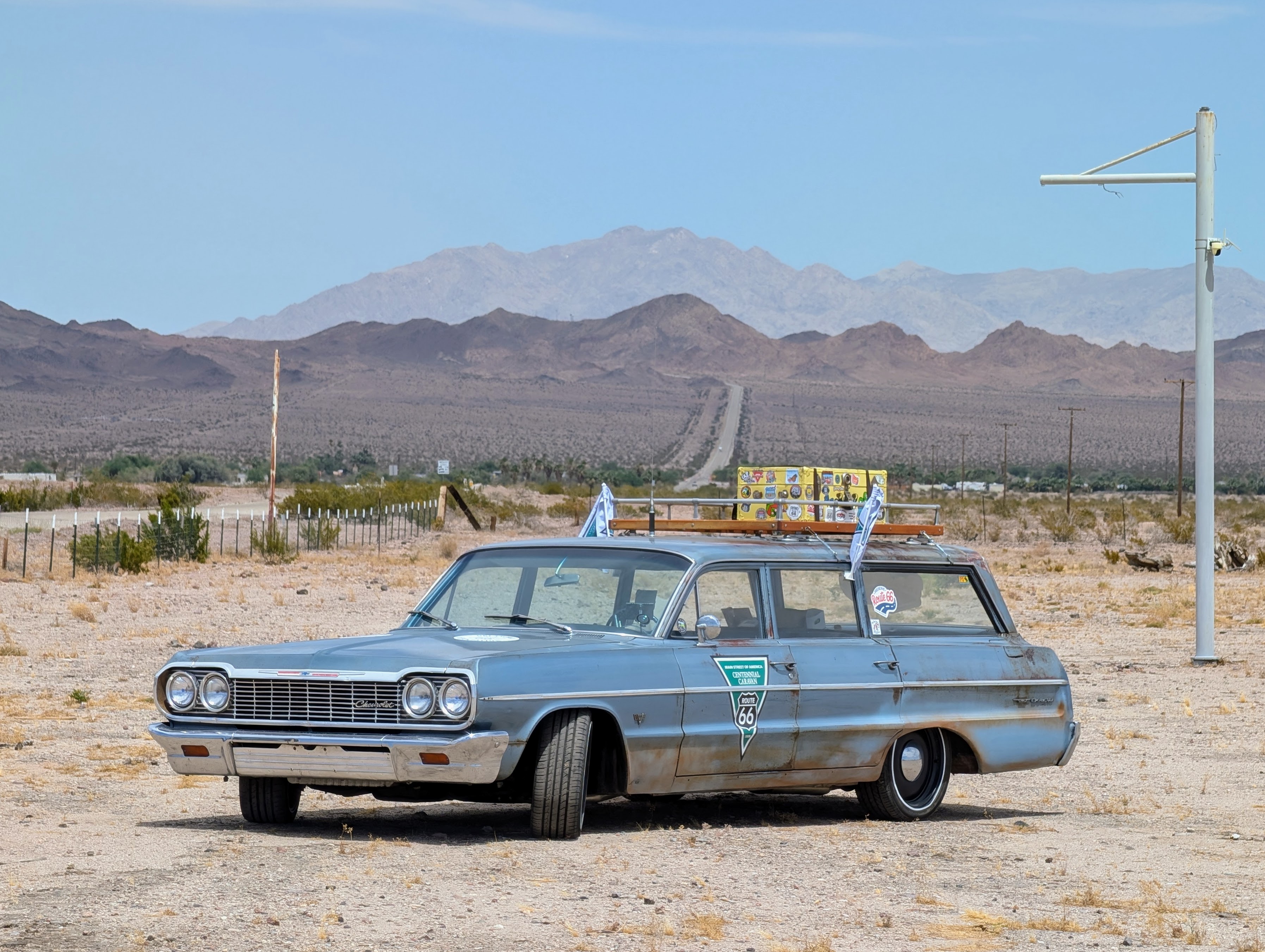
Once everyone had had their fill (and I had finished my R.C. Cola!) we moved on to Road Runner’s Retreat in nearby Chambliss. I wrote about the neon sign lighting here back when it happened in November and I loved getting to share the project with others – a literal beacon in the desert. I also took what ended up being my favorite photo of Bootlegger of the entire trip with the long, closed section of Highway 66 in the background!
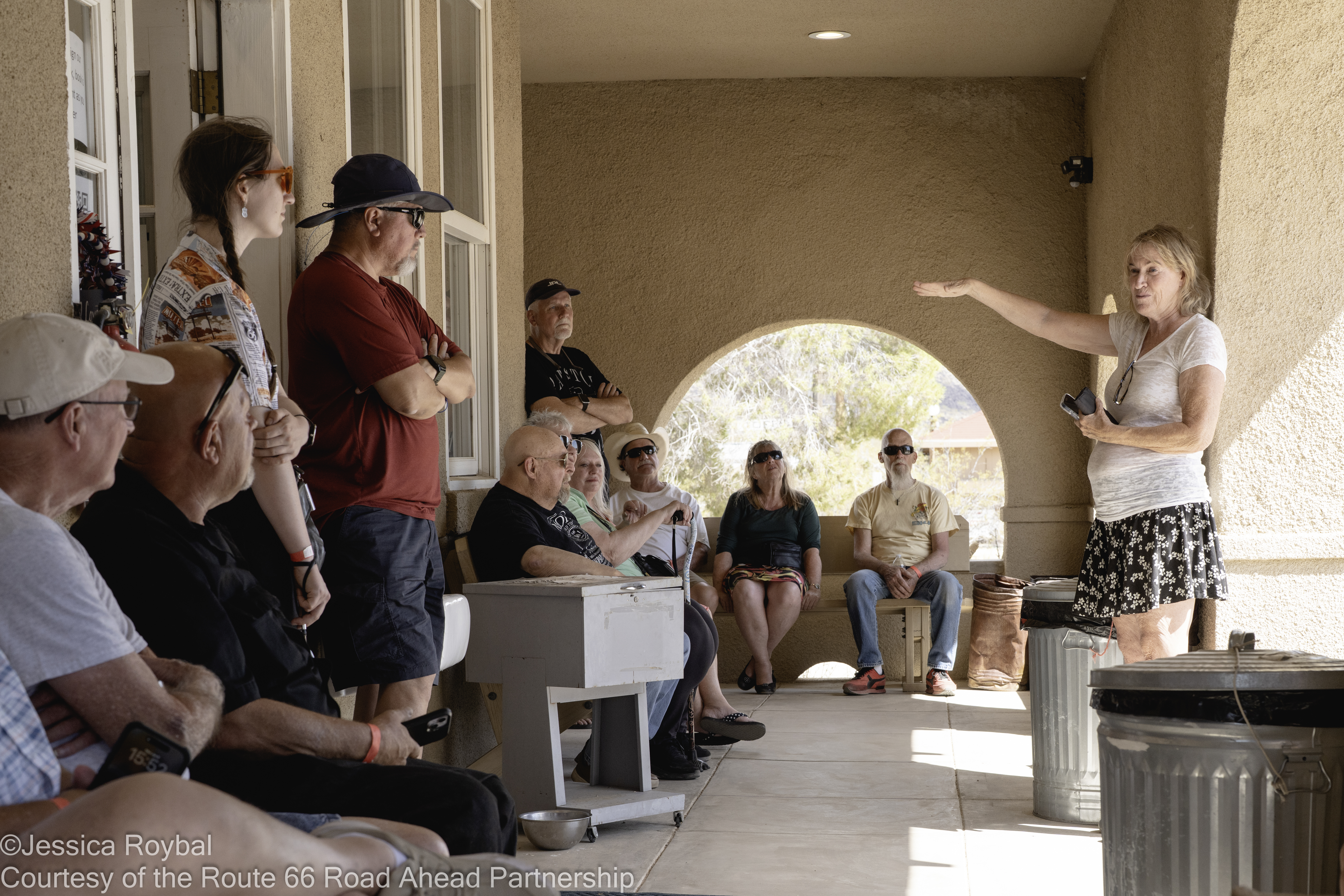
The bridges east of Chambliss are still out, so we drove north to I-40 and headed towards Needles. But we had one more stop to make in Goffs, a site that I had never taken the time to truly explore before. The Goffs Schoolhouse was built in 1914 but only served as the school for 23 years before transitioning into more of a multi-purpose community center. It was also an Army canteen during World War II that served troops from the Desert Training Center. Today, it’s a museum and the grounds are scattered with remnants of Mojave Desert livelihood. Once again, we were blessed to get a personalized chat from a local historian. These stories come alive when you have someone passionate sharing them.
As we all left the museum grounds, Mike Visket of California greeted cars with samples of his homemade beef jerky. I’m pretty sure I swore aloud (in a positive way) when I realized what he was offering and again when it graced my taste buds. I craved that stuff for the rest of the trip.
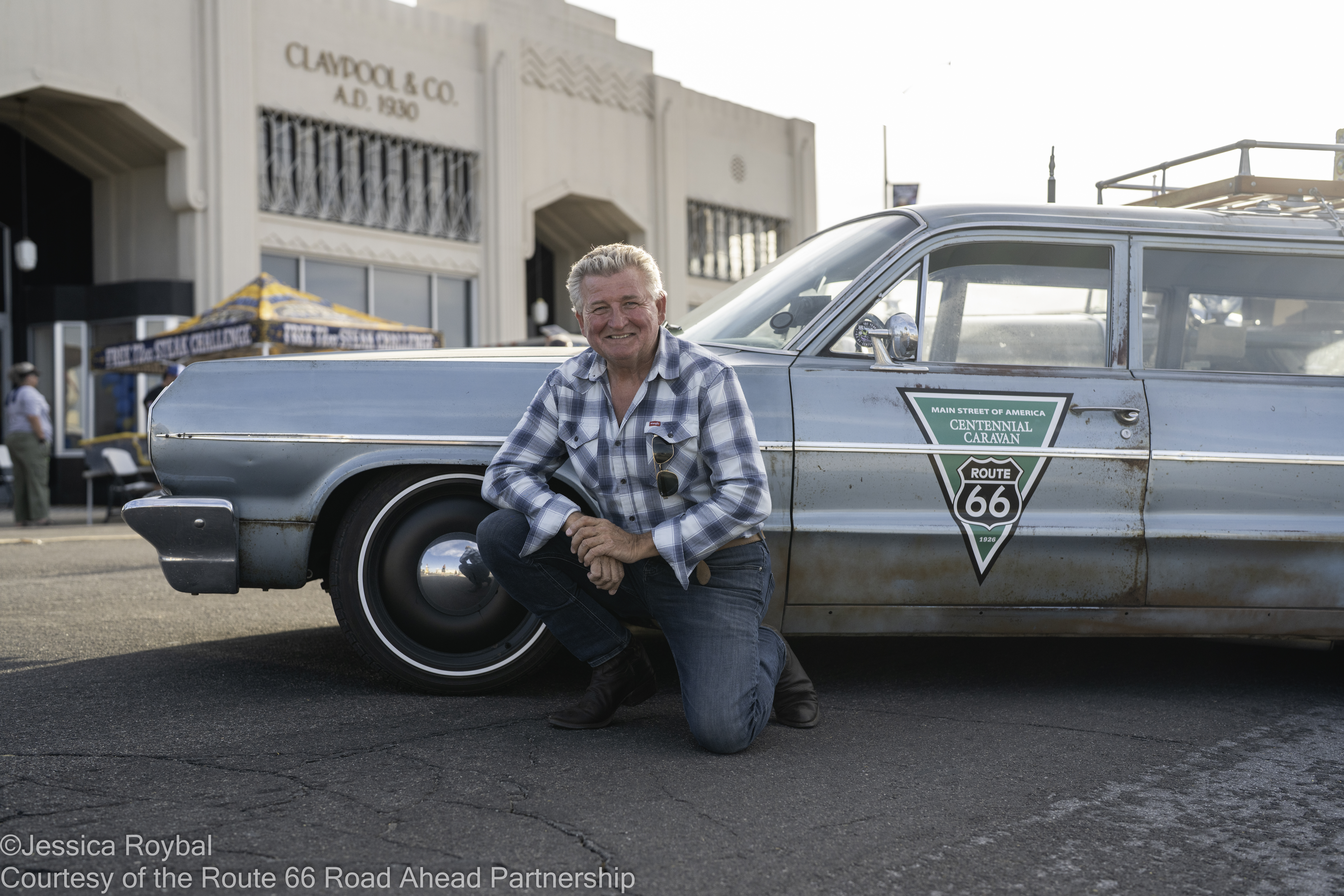
We pulled into Needles right at 5:00 PM as the Big Texan challenge was getting underway. Part of our group went to the Harvey House to learn some more history and others sought refuge in any available shade, as the heat of the day was reflecting right back at us off the downtown pavement. It was hot. And yet, we were all smiling, laughing, visiting, and filled with the joy that comes with exploration and camaraderie. I met Mark Fletcher of Classic Restos (a television program in Australia and New Zealand) and we talked about the legacy of people that had been a part of the road for decades, like Pat Smith at the Oklahoma Route 66 Museum. (Pat is now hard at work at Weatherford’s Heartland of America Museum, by the way!)
Although the steak challenge wasn’t as dramatic as the 14-minute-win in Barstow, we still had a good crowd on-hand to cheer on the competitors. It was a great time with plenty of bottled water! We ended our day at the Wagon Wheel Restaurant and, weeks later, I still remember how incredibly friendly the waitress was and how excited she was to learn about the Caravan.
Once again, it was an exhausting but rewarding day. The California Historic Route 66 Association had provided us with great turn-by-turn directions to get us through the state but the next day would be a whole new ball of wax. We’d be crossing into Arizona and I thought we’d try our best to stick together and see how the Caravaners did. I thought it was relatively straightforward, but I knew that was easy for me to say as a roadie veteran. Time would tell.